
Building a Statement Home on the Coast: What Most Clients Underestimate
There’s a reason coastal homes carry such strong emotional pull.
They promise light, openness, connection to nature, and a sense of escape — all while functioning as a primary residence, a long-term investment, and often a reflection of personal success.
But building a truly successful statement home on the coast is more complex than many clients anticipate.
Not because the vision is wrong — but because coastal environments introduce layers of technical, regulatory, and construction challenges that are easy to underestimate early on, and costly to correct later.
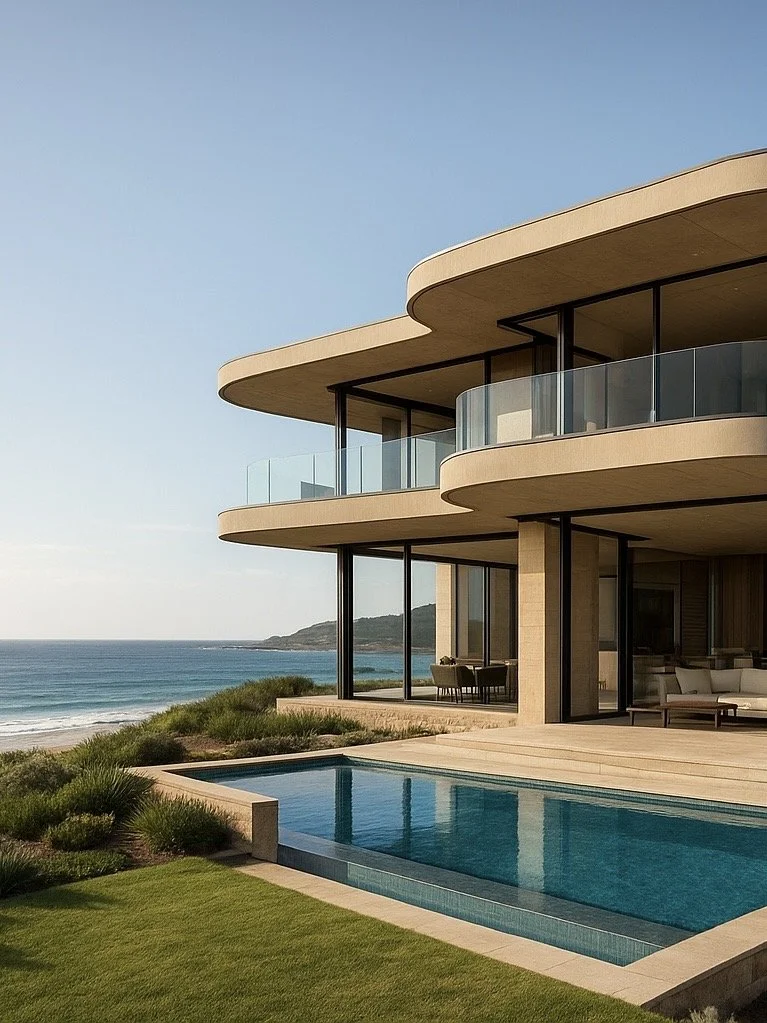
Coastal Homes Are Exposed — By Design
One of the defining features of a coastal home is exposure.
Large openings, expansive glazing, outdoor living areas, and minimal barriers between inside and out are often central to the architectural intent. But this openness comes at a cost.
Coastal conditions bring:
Salt-laden air
High winds
Increased corrosion risk
Strong UV exposure
Moisture-driven movement in materials
Designing for these conditions is one thing.
Building for them — consistently and correctly — is another.
The difference between a coastal home that ages gracefully and one that deteriorates prematurely often comes down to decisions made well before construction begins.
The Hidden Complexity of “Simple” Coastal Design
Many coastal homes aim for a clean, restrained aesthetic — minimal lines, exposed materials, and seamless transitions.
Ironically, this simplicity is where complexity hides.
In coastal builds, details such as:
Window junctions
Waterproofing transitions
Balcony interfaces
External cladding systems
Drainage and fall tolerances
become highly visible and highly consequential.
When these details are rushed, simplified, or treated as secondary, the result isn’t just aesthetic compromise — it’s long-term performance risk.
A statement home on the coast doesn’t forgive shortcuts.
It reveals them over time.
Material Selection Is About Longevity, Not Just Look
Coastal clients are often drawn to materials that feel natural, tactile, and refined — timber, stone, concrete, steel.
What’s underestimated is how differently these materials behave in coastal conditions.
Without careful selection and specification:
Corrosion accelerates
Finishes degrade unevenly
Maintenance demands increase
The home loses its intended character far sooner than expected
A capable builder doesn’t just ask “Does this look good?”
They ask “How will this perform here, over decades?”
Longevity is a design decision — but it’s enforced during construction.
Council, Compliance, and Coastal Constraints
Coastal sites often sit within tighter planning controls.
Setbacks, height limits, view sharing, bushfire overlays, flood considerations, and environmental protections are common — particularly across the Central Coast and surrounding regions.
Clients sometimes underestimate:
The time approvals can take
The documentation required
The knock-on effects of late design changes
When builders aren’t engaged with these constraints early, projects can stall — or worse, require redesign mid-stream.
A smooth coastal build relies on foresight, not reaction.
Sustainability on the Coast Is About Comfort as Much as Efficiency
Sustainability is often discussed in terms of energy ratings or technology.
In coastal homes, it’s equally about livability.
Well-considered coastal homes:
Capture breezes without creating drafts
Manage heat gain without relying solely on mechanical systems
Balance glazing with shading and orientation
Prioritise airtightness and moisture control
These outcomes aren’t achieved by products alone.
They’re achieved by aligning design intent with disciplined execution on site.
When sustainability is treated as an afterthought, comfort is usually the first thing compromised.
Budget Pressure Hits Coastal Builds Differently
Most clients expect some degree of budget tension during construction.
What’s often underestimated is how coastal conditions amplify that pressure.
Specialist materials, protective systems, access constraints, and additional compliance requirements all add complexity. When these factors aren’t accounted for upfront, the risk of reactive cost-cutting increases.
And reactive cost-cutting is where statement homes lose their edge.
The right builder helps clients:
Understand true cost drivers early
Prioritise where investment matters most
Avoid false economies that undermine long-term value
Transparency doesn’t remove hard decisions — but it makes them informed.
Why Builder Experience With Coastal Conditions Matters
Not all builders are suited to coastal work.
It requires:
Comfort with higher levels of detailing
Understanding of environmental exposure
Willingness to slow down where precision matters
Strong relationships with skilled trades and suppliers
A builder unfamiliar with coastal demands may still deliver a finished home — but often at the expense of durability, comfort, or design integrity.
Experience isn’t just about years.
It’s about mindset, standards, and respect for context.
A Final Word for Clients Planning a Coastal Statement Home
A statement home on the coast isn’t defined by size or cost.
It’s defined by:
How well it responds to its environment
How thoughtfully it balances exposure and protection
How carefully details are resolved
How confidently it will perform years from now
The most successful coastal homes are not just beautiful at handover.
They’re resilient, comfortable, and quietly robust long after.
Choosing the right builder isn’t about who can build on the coast.
It’s about who understands what the coast demands — and is willing to build accordingly.